One hand position problem
A flat handlebar gives you a single place to put your palms, which is comfortable for short rides and tiring past about ninety minutes. Bar ends or a swept-back grip add a second position cheaply.
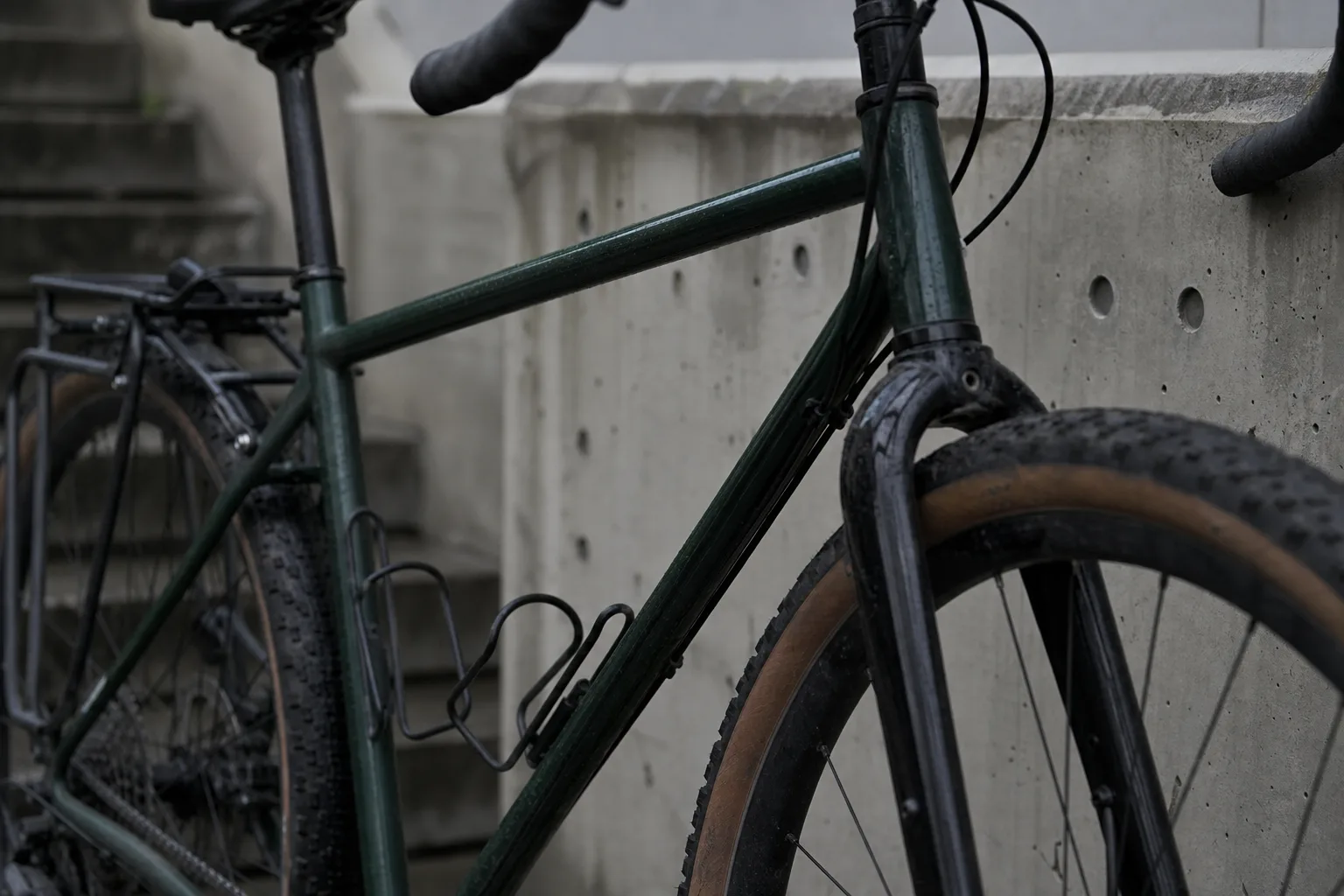
Most bikes in this category ship with tires between 32 and 45 millimeters. Anything narrower behaves like a road bike on rough pavement, and anything wider adds drag you will feel on every mile of smooth asphalt.
A flat handlebar gives you a single place to put your palms, which is comfortable for short rides and tiring past about ninety minutes. Bar ends or a swept-back grip add a second position cheaply.
Threaded eyelets for fenders and a rear rack are worth more on a daily commute than a pound or two of frame weight. Retrofitting either without mounts means clamps, rattles, and compromise.
Buyers routinely specify for rides they intend to take rather than rides they took last year. Look at your actual mileage and surfaces before you pay for clearance you will never use.
The category exists because most people are not doing one thing on a bicycle. They ride four miles to an office in ordinary clothes, then on Saturday they ride fifteen miles on a paved rail trail with somebody slower than they are, and then the bike sits in a garage for eleven days. A machine optimized for any single one of those uses is compromised at the other two. The compromise machine has a name, several names actually, and the marketing around it is vague enough that it is worth setting out what physically distinguishes it from the alternatives before anyone spends money.
Upright geometry comes first: a taller head tube and a shorter reach put your torso somewhere near forty-five to sixty degrees off horizontal, rather than the thirty or less a road bike asks for. That costs you speed into a headwind, measurably, because your body is the largest surface the air hits. It buys you a neck that can turn to check a lane change, wrists carrying less of your weight, and a lower back that does not complain after a week of riding. Second, tires in the rough range of thirty-two to forty-five millimeters, run at pressures well under a road bike's. Third, a flat handlebar, which puts your hands in one position and your brake levers under your fingers at all times.
Each trait is a real trade, not a free upgrade. The flat bar in particular is worth being honest about: one hand position is fine for forty minutes and starts to matter around ninety, which is why long-distance riders keep coming back to drop bars with their three or four distinct places to put a palm. Bar ends or a swept grip partially solve it. The tires cost you a little rolling speed on smooth asphalt and give you back the ability to hit a pothole edge at fifteen miles an hour without a pinch flat, which on a commute route you ride two hundred times a year is not a small thing.
If your weekend ride is consistently over thirty miles and you care what your average speed is, you will be happier on a road bike, and you will be happier faster than you expect. If your route includes genuine dirt, loose gravel, roots, or a fire road, a gravel bike gives you drop bars plus clearance for forty-five millimeter knobbies, and the price gap has narrowed. If you are riding singletrack, you need suspension and slack angles, and no amount of tire width substitutes. The honest test is what you did last year, not what you intend to do. People buy for the aspirational version of themselves and then own a bike that fits nobody.
There is also a rider who should go the other direction, toward something even more upright and heavier, with fenders and a rack already bolted on and a step-through frame. That rider is commuting two miles in work shoes and does not want a project. A comfort-oriented Hybrid Bike with a swept bar and a sprung saddle serves that trip better than anything sportier, and the person riding it is not giving up anything they were going to use.
The purchase price is the smaller number. A bike bought without fender mounts means either riding wet or paying for clip-on fenders that rattle. A bike without rack mounts means a backpack, and a backpack on a warm commute means arriving damp. Tires that are technically fast but thin-cased mean flats, and a flat on a Tuesday morning costs a late arrival plus twenty dollars in tube and lever purchases at whatever shop is nearest. Buying a size up because it was the one in stock costs a saddle, a stem, and eventually a resale. The specification sheet does not price any of this, and the buyer absorbs all of it.
Weight is the cost people overestimate and stair-carrying is the one they underestimate. A twenty-eight pound bike and a thirty-three pound bike feel nearly identical rolling, and completely different on the third flight up to a walk-up apartment, twice a day, in February. The Consumer Product Safety Commission oversees bicycle construction standards in the United States, which covers braking and structural requirements but says nothing about whether a given frame suits your building or your route.
Four things determine nearly everything else. What surface do you actually ride, honestly measured over the last twelve months. How far, in one sitting, at the longest. Where does the bike live and how does it get there, meaning stairs, elevators, street parking, or a garage. And what are you carrying, because a laptop and a change of clothes is a rack-and-pannier problem, not a backpack problem. Answer those four and the tire width, the frame material, the number of gears, and the mounting points stop being open questions and become a short list of specifications you can check against any bike on any floor.
Everything after that is refinement: which of two frames fits your reach, whether hydraulic brakes are worth the service interval, how much a lighter wheelset actually changes a Tuesday. Those are answerable, and they are answered elsewhere on this site. The category itself is straightforward once you stop expecting it to be the fastest thing on the trail, because it was never trying to be.
| When gravel wins | If any regular part of your route is unpaved, a gravel bike offers the same tire clearance with drop bars and more hand positions. The price overlap with upper-tier commuters is now small. |
| When a road bike wins | Riders consistently doing thirty miles or more, who care about pace, notice the aerodynamic penalty of sitting upright almost immediately. That preference tends to show up within a few months, not years. |
| Stairs are the hidden tax | Frame weight barely registers while rolling but dominates if the bike lives above the ground floor. Count the flights before you shortlist anything over about thirty pounds. |
Carrying a laptop and clothes on your back is workable in cool weather and unpleasant in warm weather. A rack and a single pannier solves it for well under a hundred dollars.
Threaded eyelets for fenders and a rear rack are worth more on a daily commute than a pound or two of frame weight. Retrofitting either without mounts means clamps, rattles, and compromise.
Buyers routinely specify for rides they intend to take rather than rides they took last year. Look at your actual mileage and surfaces before you pay for clearance you will never use.
If any regular part of your route is unpaved, a gravel bike offers the same tire clearance with drop bars and more hand positions. The price overlap with upper-tier commuters is now small.